What We Do
The Novare Center for Organizational Formation serves as a hub to help theological schools and partners within the wider community of theological education navigate complex change.
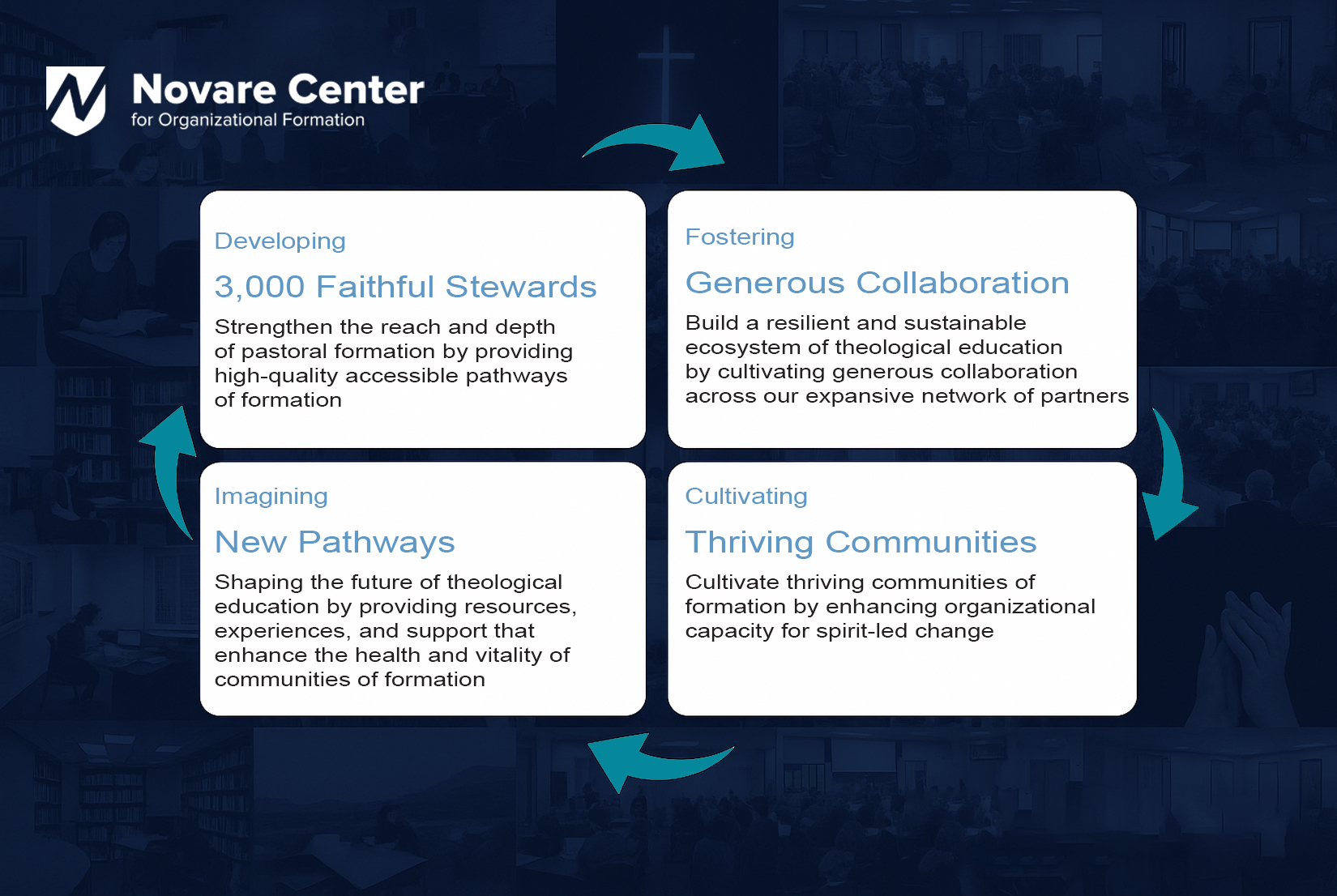
Developing Faithful Stewards
Our primary goal is to strengthen the reach and depth of pastoral formation. This work focuses on cultivating contextually aware, developmentally minded, and holistically formed leaders who can steward the work of local communities of faith with wisdom and faithfulness. All other project activities serve this central objective
Fostering Generous Collaboration
Novare brings together a diverse, resilient, and sustainable ecosystem of partners who are committed to working alongside one another. Generous collaboration is both a way of working and a desired outcome becuase it creating a community that supports and challenges one another across traditions, geographies, and institutional types.
Cultivating Thriving Communities
Partners participate in shared research, data analysis, and resource development that deepen our collective imagination for pastoral formation. Shared tools and resources created through Novare help congregations, denominations, and schools assess and strengthen their organizational vitality and enhance their capacity for Spirit-led change. This work aims to strengthen the broader ecosystem in which leaders are called and formed.
Imagining New Pathways
Partners work together to identify, cultivate, and implement alternative ways of being within theological education, thereby shaping the future of theological education. These pathways involve new financial models, new structures for collaboration, or entirely new approaches to pastoral formation. The aim is to develop a wide range of models that are contextually grounded, mission aligned, and adaptable to the changing realities facing the Church.
Types of Engagement
The Novare Center works alongside theological schools and partners across the ecosystem to support faithful adaptation and collaboration. Our partnerships take many forms, from data-informed diagnostics and collaborative cohorts to focused innovation accelerators and longer-term formation processes.
Data Analysis
Institutions within the ecosystem of theological education are supported through data analysis, diagnostic assessments, structured conversations, and collaborative cohorts. These efforts help schools and the wider community of theological education build a shared understanding of identity, align practices and mission, and engage in meaningful collaboration.
Innovation Accelerators
The Novare Center also leads Collaborative Innovation Accelerators that offer targeted support for institutions experimenting with new models and methods. These accelerators provide focused, time-bound engagement around specific innovations and include curated libraries of resources to support local implementation. As the needs of the ecosystem evolve, the accelerator topics will adapt accordingly.
Transformational Cohorts
For institutions ready to undertake deeper transformation, the Novare Center facilitates a cohort-based process of organizational formation. These guided engagements help schools reimagine and realign their mission, governance, and operations around the long-term work of pastoral formation. While the innovation accelerators provide focused and practical help with technical fixes, the organizational formation cohorts focus on deep, adaptive change.
Collective Impact
In addition, the center coordinates collective impact efforts across the ecosystem. Through conversations with others, The Novare Center is a catalytic and connective presence in the ecology of theological education.
Levels of Engagement
Collaborators (Level 1)
Shared Learning and Assessment
Collaborators participate in shared conversations, contribute basic data for collective learning, and complete the Organizational Vitality Index. This tier provides a common foundation for collaboration and helps build a shared understanding of current realities
Innovators (Level 2)
Technical Change Projects
Innovators, work together on targeted projects that address specific challenges. These may include humanized AI practices, competency-based approaches to theological education, operational and financial models, Latinx pastoral formation, collaboration among embedded schools, or other focused initiatives. Resources are available to support these collaborative efforts.
Reformers (Level 3)
Adaptive Change and Transformation
Reformers commit to a holistic, systemic process of adaptive change. Each organization participates in an initial engagement to discern the scope and nature of the work. Projects developed at this tier are approved and guided by the project stewardship team. This is where the majority of project resources are invested, supporting long-term transformation across the ecosystem of theological education.
If you are considering how your institution might engage with the Novare Center, we invite you to reach out and explore potential pathways together.